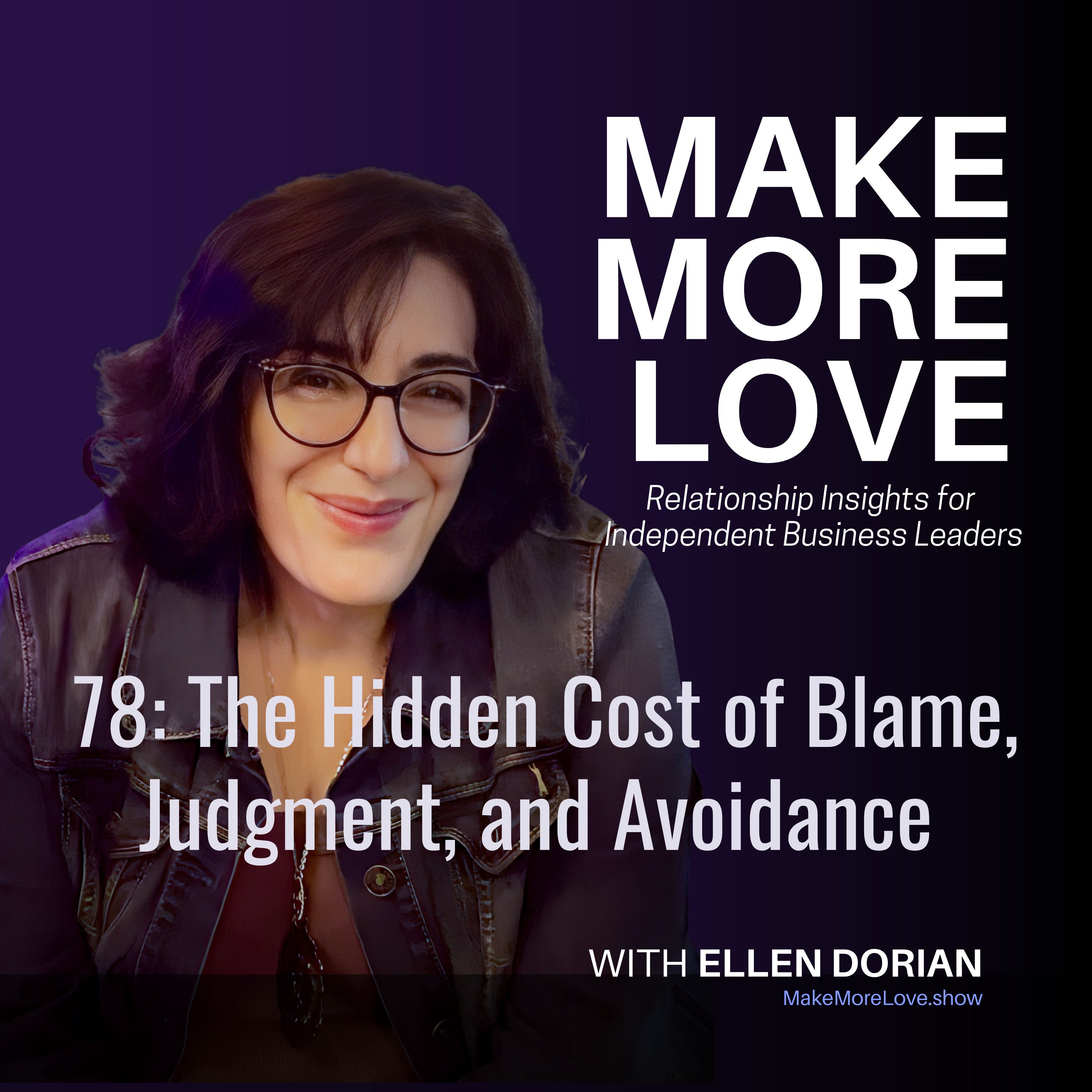
Stuck in the Same Fight? How Blame, Judgment, and Avoidance Keep Couples Trapped

Every couple hits rough patches. But sometimes the real problem is not the argument itself—it is the pattern underneath it. 🔄
Many relationships stay stuck not because love is gone, but because the same three forces keep showing up: blame, judgment, and avoidance. These habits quietly erode trust, block communication, and make real progress feel impossible.
The good news? Once you can identify these patterns, you can begin to change them.
The Hidden Cost of Blame
Blame feels natural when something goes wrong. Someone forgot. Someone failed. Someone disappointed the other. It is easy to point fingers.
But blame is more complex than it appears. In this episode, Ellen and Bill Storm explain that blame often shows up in three forms:
- Fair blame – when someone genuinely made a mistake
- Unfair blame – when responsibility is distorted or exaggerated
- Self-blame – when you carry all the fault yourself
The goal is not to eliminate blame entirely. Accountability matters. But when blame becomes the main language of your relationship, growth stops.
Healthy couples move beyond “Whose fault is this?” and ask, “What do we do now?”
Why Judgment Cuts Deeper
Blame focuses on behavior. Judgment attacks identity.
There is a major difference between saying:
- “You handled that badly.”
and - “You are impossible to deal with.”
One addresses an action. The other labels the person.
Judgment is especially damaging because it creates shame. Instead of feeling invited into change, your partner feels pushed away. 🚪
When judgment becomes normal, emotional safety disappears. And without emotional safety, honest conversations become harder and harder to have.
Avoidance: The Silent Relationship Killer
If blame and judgment are the spark, avoidance is often the reaction.
Many people withdraw from hard conversations because they fear conflict, rejection, or failure. Others convince themselves the issue is not important enough to discuss.
But avoidance does not solve problems—it delays them. ⏳
Unspoken frustrations build resentment. Small misunderstandings grow larger. Distance replaces connection.
The truth is, most people already have the skills they need to face these conversations. They use those same skills every day at work:
- problem-solving
- negotiation
- leadership
- emotional control
- strategic thinking
The challenge is learning to bring those skills into the relationship.
How to Break the Pattern
If you recognize blame, judgment, or avoidance in your relationship, start here:
1. Name the Real Problem
Often couples argue about surface issues while deeper needs go unspoken. Is the real issue dishes—or feeling unsupported? Is it money—or security?
2. Replace Accusation with Curiosity
Instead of assuming the worst, ask questions. Seek to understand before reacting.
3. Address Issues Early
Small problems are easier to solve than long-standing resentment.
4. Focus on Progress, Not Perfection
You do not need flawless communication overnight. Consistent improvement matters more. 🌱
What This Means for Your Relationship
Every relationship will face tension. Conflict itself is not the enemy. The real danger is getting trapped in patterns that repeat without resolution.
Blame keeps you looking backward.
Judgment pushes your partner away.
Avoidance freezes growth in place.
But when you learn to communicate differently, conflict can become a doorway to greater trust, respect, and intimacy. ❤️
Ready for a Reset?
If your relationship feels stuck, clarity is the first step.
Take the free Relationship Dynamics Quiz at MakeMoreLove.show/quiz to discover what needs the most attention right now.
And if you want personal guidance, book a free Relationship Reset Call at relationshipresetcall.com.
Because love is not something you simply find—it is something you build.
Credits:

🚨 Your Business Is Winning—But Is Your Relationship Losing?